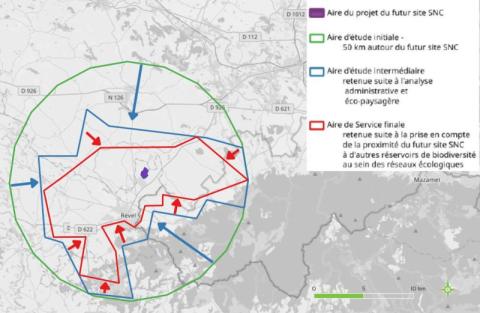
Natural Sites for Compensation, Restoration and Renaturation (SNCRR) now mark a key milestone in structuring ecological compensation projects. This mechanism, created under the French Environmental Code on October 23, 2023, is unique in Europe and carries a strong ambition: to generate real, measurable, and lasting ecological gains for species and habitats.
But a question quickly arises:
How can we ensure that restored or recreated habitats will truly be functional for the target species?
In other words, how can populations of the target species effectively colonize restored or recreated habitats, persist over time, and benefit from sufficient connectivity between these areas?
This is precisely the issue addressed by SimOïko, a Population Viability Analysis (PVA) model.
It notably makes it possible to:
- estimate population extinction probabilities
- determine minimum viable population sizes
- define minimum reserve areas
- predict future population sizes
- compare management and restoration options
- assess the impact of habitat loss, particularly on small populations
- and justify the functional proximity between future SNCRR sites and development projects
Indeed, within the SNCRR framework, justifying a service area is a crucial step in the certification process. SimOïko contributes to this by evaluating the capacity for individual exchanges between all parcels within a territory and the proposed SNCRR site.
Would you like to learn more about SNCRR?
Our expert on the topic, Catherine de Roincé, can support youfeel free to contact her for more information.
If you would like to learn more about PVA, a key reference in the field is Population Viability Analysis (2002), edited by Steven R. Beissinger and Dale R. McCullough.