Off to WindEurope in Madrid and we’ll be there for 3 days!
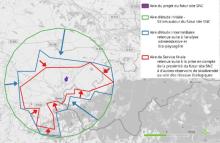
Natural Sites for Compensation, Restoration and Renaturation (SNCRR) now mark a key milestone in structuring ecological compensation projects. This mechanism, created under the French Environmental Code on October 23, 2023, is unique in Europe and carries a strong ambition: to generate real, measurable, and lasting ecological gains for species and habitats.
But a question quickly arises:
How can we ensure that restored or recreated habitats will truly be functional for the target species?
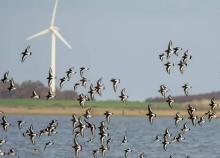
In two weeks, we will be attending the Conference on Wind Energy & Wildlife Impacts (CWW), the leading international event on wind energy and its interaction with biodiversity.
Now in its eighth year, the conference will be held in Montpellier, France, from September 8 to 12, and is co-organized by France Renouvelables and our colleagues at Biotope.
We will be presenting a special feature of our ecological simulation software SimOïko, specifically designed to analyze the risk of collision between flying species and wind turbines.
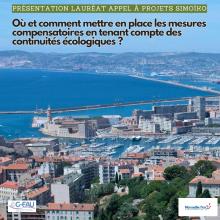
Remember! At the end of December, we announced the winners of our call for projects involving the use of our SimOïko software.
Today, we take a closer look at one of the selected projects: that of Jeremie Solere, a CIFRE scholarship doctoral student. The project is jointly led by the Port of Marseille Fos and the UMR G-eau laboratory in Montpellier.

Take a proactive local authority, two consulting firms with complementary expertise, and recommendations that can be immediately implemented in the field.
In a short time, you will see concrete changes that benefit biodiversity.
This is exactly what happened a few weeks ago in the town of Saint-Louis, in Alsace.
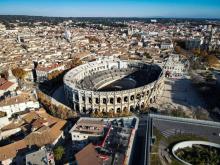
TerrOïko and DarkSkyLab were commissioned to identify the town's dark sky areas and propose associated public lighting management actions.
In just a few days, the local authority took action to implement several of our recommendations:
You know what gives us the greatest pleasure?
Seeing that the studies we produce don't just sit on a shelf.
Better still, to see that they help public and private players alike to radically transform the strategic management of their territories, their land holdings or their projects, with benefits that sometimes go far beyond the mere preservation of biodiversity.
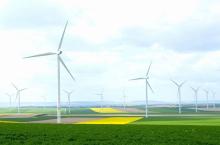
Is the accumulation of wind farms in the same area likely to have an impact on bird populations?
This is the subject of a study in which we recently participated, and whose main results we presented last week at the Rencontres de l'Observatoire des énergies renouvelables (EnR) et de la biodiversité, held at the French Ministry of the Environment and Ecological Transition.
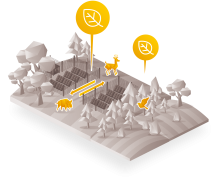
We need to give you an update on our research project into fences and their ecological impact.
Launched in early 2024, the Polymor-FENCE project aims to analyze and understand the impact of fences associated with photovoltaic power plants on biodiversity and the ecological continuity of natural environments.
Using an integrated approach combining field observations, artificial intelligence and spatial modeling, the project is developing innovative tools designed to anticipate and mitigate these effects.
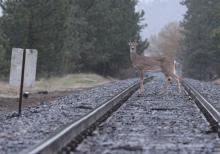
Last week, our CEO Sylvain Moulherat was invited to present our work on the subject at the Via Fauna technical seminar.
Via Fauna is a project launched in 2017 by the Fédération Régionale des Chasseurs d'Occitanie (Regional Federation of Hunters), which has led to the development of tools and methods for better integrating ecological connectivity into land-use planning projects and urban planning documents.
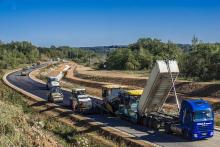
Ecological compensation is failing to meet its objectives. So, we are shifting into experimentation mode.
To ensure "no net loss" of biodiversity, French regulations rely on the ERC sequence: the negative impacts of land development must first be avoided and reduced. If residual impacts remain, they must be compensated through measures that generate equivalent ecological gains.