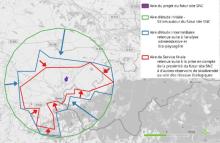
What if analyzing ecological corridors became accessible, despite the challenges of creating your maps and the heavy workload on your teams, even as your projects pile up?

Between the modeling tools to manage, the data to gather, and the technical and scientific expertise required, assessing the ecological functionality of a region can quickly become a daunting task. This is especially true when results must be delivered within tight deadlines and budgets. 

Especially since ecological connectivity is becoming a must: the Green and Blue Network (TVB), the Municipal Biodiversity Atlas (ABC), the Joint Development Zone (ZAC), the BiodiverCity label, renewable energy projects (EnR), etc. 
 mc-chamayou  

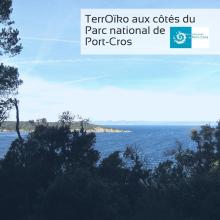
TerrOïko in partnership with Port-Cros National Park

Since 2021, Port-Cros National Park has been participating in the Stoechas program, funded by the Prince Albert II of Monaco Foundation. This ambitious project aims to compile an exceptional naturalist inventory of the terrestrial flora and fauna within its jurisdiction, stretching from La Garde to Ramatuelle (Var).

 mc-chamayou  

How can we ensure that restored or recreated habitats will truly be functional for the target species?

Natural Sites for Compensation, Restoration and Renaturation (SNCRR) now mark a key milestone in structuring ecological compensation projects. This mechanism, created under the French Environmental Code on October 23, 2023, is unique in Europe and carries a strong ambition: to generate real, measurable, and lasting ecological gains for species and habitats.

But a question quickly arises:
How can we ensure that restored or recreated habitats will truly be functional for the target species?

 mc-chamayou  

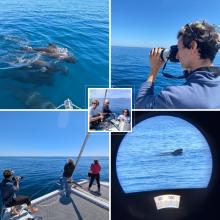
TerrOïko on a mission: meeting cetaceans in the Mediterranean

You think we spend all our time behind a computer?
Well, not quite.

The day-to-day work of our ecological engineers involves conducting research, analyzing data and carrying out studies on behalf of public and private players.

So yes, most of the time we have our hands in statistics, modeling and mapping tools, scientific literature...

But when data or knowledge are lacking, we sometimes have to go out and find them, in the field.

A few days ago, our colleague Victor Gauducheau, a specialist in marine environments, cast off for a little trip out to sea.

 mc-chamayou  

The Damier de Godart butterfly: a species in decline

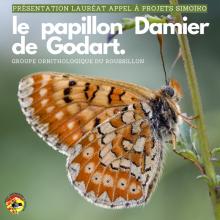
Remember! At the end of December, we announced the winners of our call for projects using our SimOïko software. Today, we are introducing one of the winners: the Groupe Ornithologique du Roussillon, represented by Aurélien Gaunet, who is conducting a study on the Damier de Godart butterfly (Euphydryas desfontainii).

 mc-chamayou  

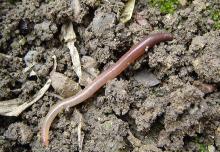
Did You Know? Soils harbor a quarter of all currently known living species on Earth.

Bacteria, fungi, plants, mites, worms, mammals... Soils shelter a quarter of all currently known living species on Earth.

Long overlooked, these ecosystems are now receiving increasing attention, particularly due to the essential services they provide to human populations: carbon storage, support for agricultural and food production, erosion and flood prevention, water purification, and contributions to medical research.

 mc-chamayou  

Ecological Networks, ERC Sequences, Natural Spaces, Infrastructures...: A Recap of Our Studies in 2023

The life (of a consulting firm) is like a box of chocolates. You never know what you’re going to get.*

Now that the year is coming to a close, we can say that in 2023, we were treated to a nice assortment.

First, one number: 50, which is the number of missions we have won, either alone or in partnership, since the beginning of January.

In half of the cases, these are "territorial" studies, on behalf of local authorities or natural areas:

 mc-chamayou